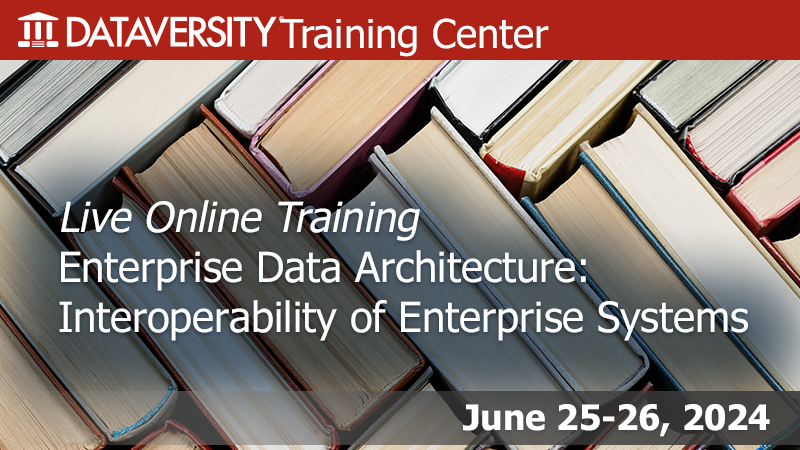
EDAI0624: Enterprise Data Architecture: Interoperability of Enterprise Systems
In this live, online, two-day seminar, instructor Dave Wells discusses the concepts, techniques, and technologies that exist to meet enterprise and operational data challenges for modern data-centric organizations. It is time to step up to Operational Data Architecture for enterprise systems – to reduce technical debt and to prepare for changes yet to come. But a fragmented, technology-first approach is time-consuming, costly, and often chaotic. A well-designed Enterprise Data Architecture is built on a foundation of semantics – shared language among systems – that promotes interoperability and prevents Data Management chaos.
Over the past few decades, Data Architecture has focused almost exclusively on managing data for analytics, with operational data viewed as “data sources.” Operational data managed by enterprise systems is much more than source data for analytics. It is the data used to run the business, whereas analytical data is used to observe the business. Business operations don’t work without operational data, yet we’ve largely ignored it as a critical part of Enterprise Data Management Architecture.
During the years that we’ve disregarded operational data, many changes have occurred in the world of enterprise systems and data. What was once primarily transactional systems have evolved to encompass transactions, workflow automation, process automation, commercial IoT, and industrial IoT. Today’s transactional systems are dominated by purchased products, each with unique semantics, data models, and proprietary Data Architecture. The result is a large accumulation of technical debt that limits data exchange, data sharing, data interfaces, data quality, and even data meaning.
Instructor Dave Wells discusses the concepts, techniques, and technologies that exist to meet enterprise and operational data challenges for modern data-centric organizations. It is time to step up to Operational Data Architecture for enterprise systems – to reduce technical debt and to prepare for changes yet to come. But a fragmented, technology-first approach is time-consuming, costly, and often chaotic. A well-designed Enterprise Data Architecture is built on a foundation of semantics – shared language among systems – that promotes interoperability and prevents Data Management chaos.
Two-Day Seminar Price:
- $1,000 Early Bird Price through June 7, 2024
- $1,200 after June 7, 2024
Last day to register: Sunday June 23, 2024
Seminar CEUs: 12
Seminar Date: June 25 – 26, 2024
Seminar Time: 11 AM – 6 PM Eastern / 8 AM – 3 PM Pacific
During this live, online, two-day seminar you will learn:
- The variety of enterprise systems and the roles of each
- The variety of data created and managed by enterprise systems
- The variety of challenges – data sprawl, data disparity, technical debt, etc. – for enterprise data management
- The role of semantics as a common language among systems, and the skills of a “semantic modeling made easy” approach to semantics-based architecture
- Operational Data Architecture patterns – MDM, ODS, ODH, Data Collaboration, and Data Products – and the role of each in data integration and interoperability
- Design techniques for adaptable and sustainable architecture
Who Should Attend?
This two-day, live, online seminar is intended for business and IT professionals at all levels who have been tasked with understanding and implementing these types of technologies on behalf of their organization, as well as those who want to broaden their career opportunities through practical education. It does assume general business knowledge, but not specific technical knowledge or experience. It is appropriate for executives, departmental and/or project managers, data and enterprise architects, consultants, data scientists, BI professionals, and technical staff. The course is not designed for any specific business domain, and as such is applicable to any business function that is in need of more reliable information, such as finance, manufacturing, human resources, analytics, operations, and more.
We offer several bulk licensing options for corporate and group use.
Contact us for a follow-up discussion!
Seminar Format
- A two-day seminar that includes lecture format over slides with questions either throughout or at the conclusion of each section, breakout sessions, and exercises.
- The seminar date is: Tuesday, June 25 – Wednesday, June 26, 2024
- Seminar time is: 11 AM – 6 PM Eastern / 8 AM – 3 PM Pacific
- All seminar material will be made available for students to download.
- DATAVERSITY will be integrating two platforms to run the training: The DATAVERSITY Training Center (DVTC) platform and Zoom.
- The DVTC Platform is where you will start your training: https://training.dataversity.net
- This will be where you will log in, and then click a “Join Now” button on the day of the live training in your course dashboard.
- This platform will contain the syllabus for the day, information on navigating through both platforms, enable you to take notes throughout the training, join a forum with your classroom peers to network with each other even after the live online training is over, download materials, and access the recording of the training when it is complete.
- When you click the “Join Now” button in the DVTC Platform, a Zoom window will open.
- This platform is where you will take the training, view the presentation, and engage in breakout sessions.
Subscription Purchase Options
Become a DATAVERSITY Insider when you subscribe and gain access to a host of special content.


Whats Included
Access your courses anytime, anywhere, with a computer, tablet or smartphone
Videos, quizzes and interactive content designed for a proven learning experience
Unlimited access. Take your courses at your time and pace